Diana Buck, Instructor
Saturday, May 15: 9 AM – 5 PM
$260 – price includes materials fee & lunch
Discover the fundamentals of rigid heddle weaving while exploring how this versatile technique was used historically. You’ll begin with an introduction to the loom, basic weaving terminology, historical examples, and how to read and use a rigid heddle weaving pattern.
Then it’s time to weave! Working on a pre-warped loom, you’ll learn how to pass the weft, raise and lower the warp to change the shed, and beat each row into place. Once you’re comfortable with the process, you’ll continue weaving your patterned band with support from the instructor as needed.
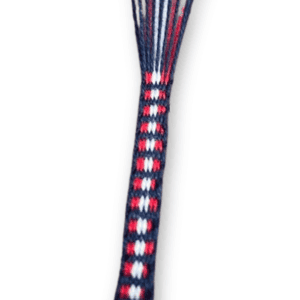
Finish your handwoven band as either a bracelet or key fob to take home. This small project is a fun, approachable introduction to loom weaving and the perfect way to learn skills you can build on in future projects. No previous weaving experience is needed.
*Students should bring small scissors
Diana Buck has been involved in fiber arts for most of her life. She grew up in a family of knitters, crocheters, quilters, needle workers, and sewers, and learned these crafts as a child. As an adult, she continued to expand her knowledge and experience, until she found her true calling to research and teach textile arts through history. She has been involved in living history for over 35 years and, over those years, has focused her studies and activities on both women’s roles and historic textiles of early 18th Century through early 19th Century time periods. Currently, as co-founder and co-leader of Njordhr’s Wanderers, her focus is on the agency of women in textile production and commerce in the North Sea region during the Early Medieval period (Viking Age). Through partnership with her husband Krag, they have conducted experimental and reconstructive archaeological projects in textile production. This has focused on re-creating tools and equipment based upon excavated examples, through the redevelopment of skills and techniques to create the different textile examples found in excavations.