Diana Buck, Instructor
Sunday, February 21: 9 AM – 3 PM
$200 – price includes materials fee & lunch
Explore the ancient art of tablet weaving, a technique used during the Viking Age to create strong, decorative woven bands. You’ll begin with an introduction to the history of tablet weaving, basic weaving terminology, historical finds, and how to read and use a tablet-weaving pattern.
Working with pre-warped tablets, you’ll learn how to pass the weft through the open shed, turn the tablets to create a new shed, and beat each row into place. As you become comfortable with the rhythm of weaving and turning the tablets, you’ll see the pattern emerge and continue working with guidance from the instructor as needed.
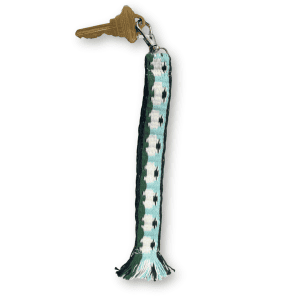
Finish your woven band as either a bracelet or key fob to take home.
This beginner-friendly workshop combines history with hands-on making and offers a great introduction to the possibilities of tablet weaving. No previous weaving experience is needed.
*Please note: This class involves repetitive hand and wrist movements, including pulling lengths of wool and twisting cards.
*Students should bring small scissors
Diana Buck has been involved in fiber arts for most of her life. She grew up in a family of knitters, crocheters, quilters, needle workers, and sewers, and learned these crafts as a child. As an adult, she continued to expand her knowledge and experience, until she found her true calling to research and teach textile arts through history. She has been involved in living history for over 35 years and, over those years, has focused her studies and activities on both women’s roles and historic textiles of early 18th Century through early 19th Century time periods. Currently, as co-founder and co-leader of Njordhr’s Wanderers, her focus is on the agency of women in textile production and commerce in the North Sea region during the Early Medieval period (Viking Age). Through partnership with her husband Krag, they have conducted experimental and reconstructive archaeological projects in textile production. This has focused on re-creating tools and equipment based upon excavated examples, through the redevelopment of skills and techniques to create the different textile examples found in excavations.